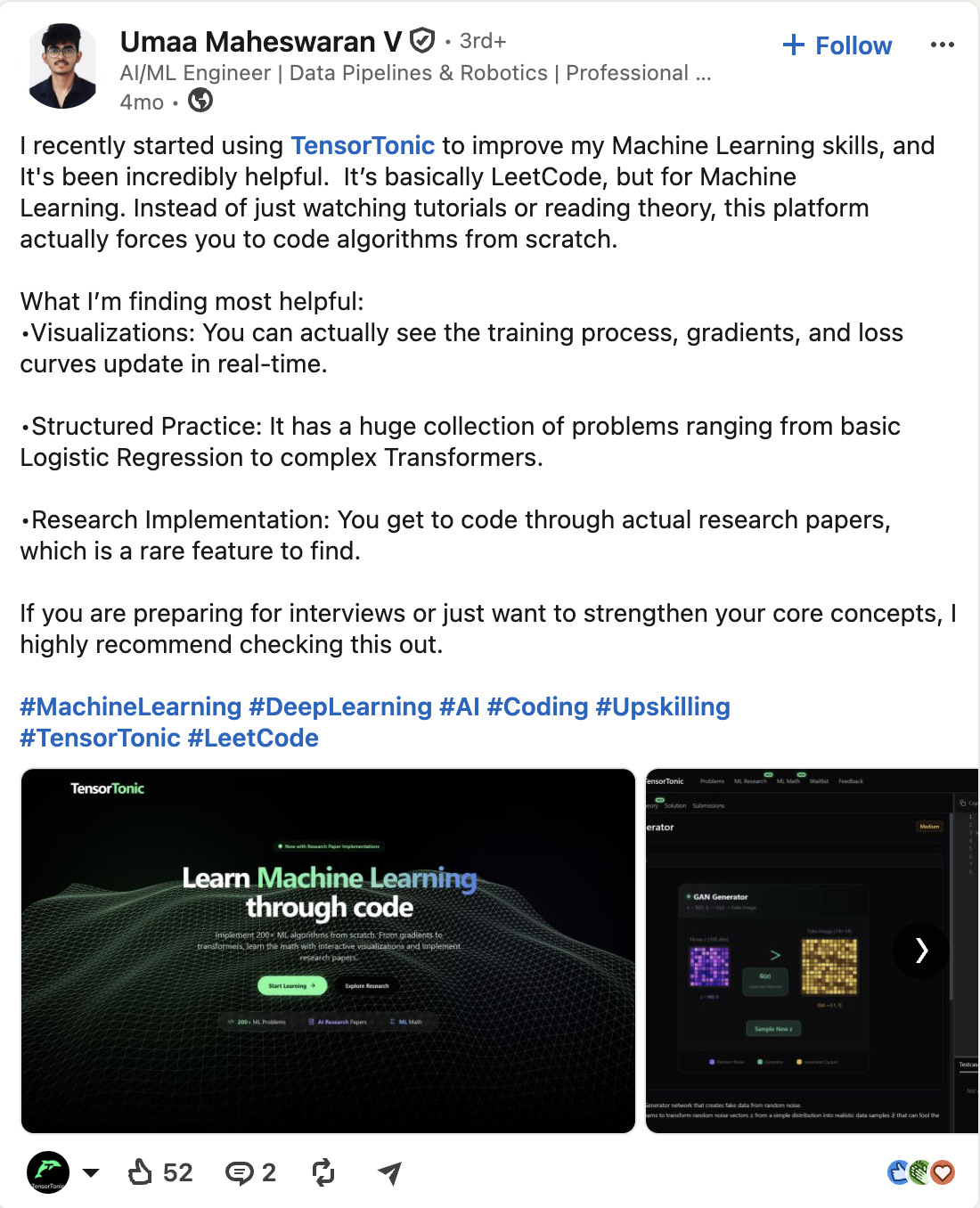
Learn Machine Learning
through code
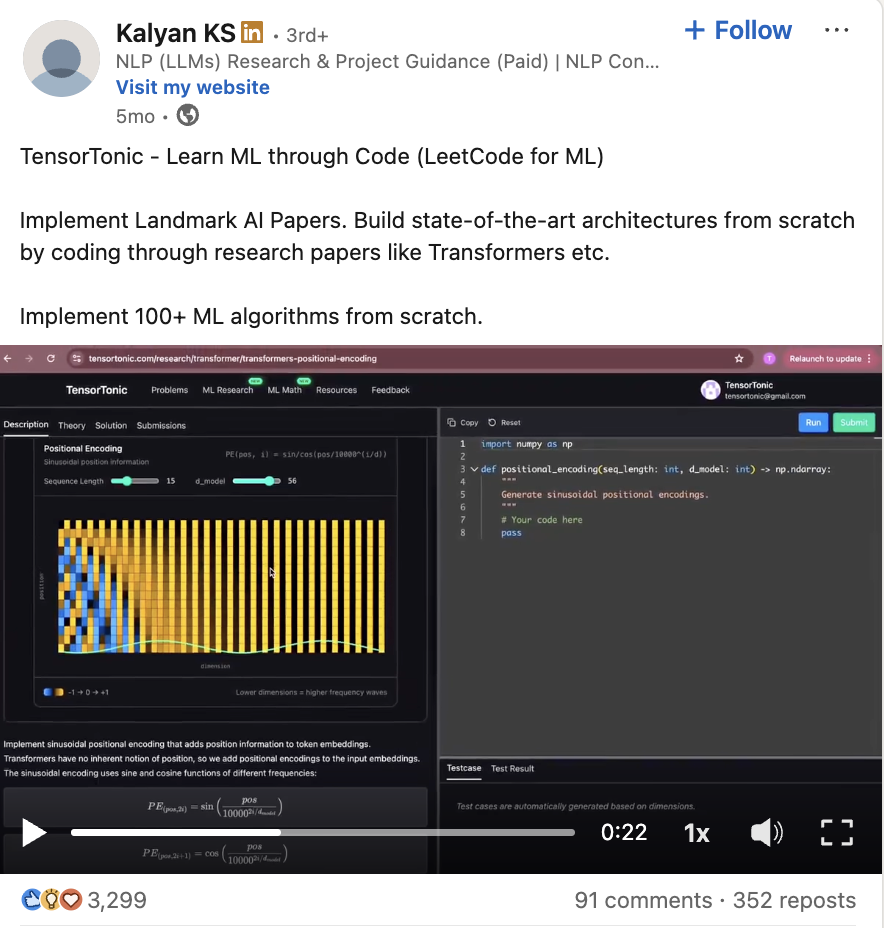
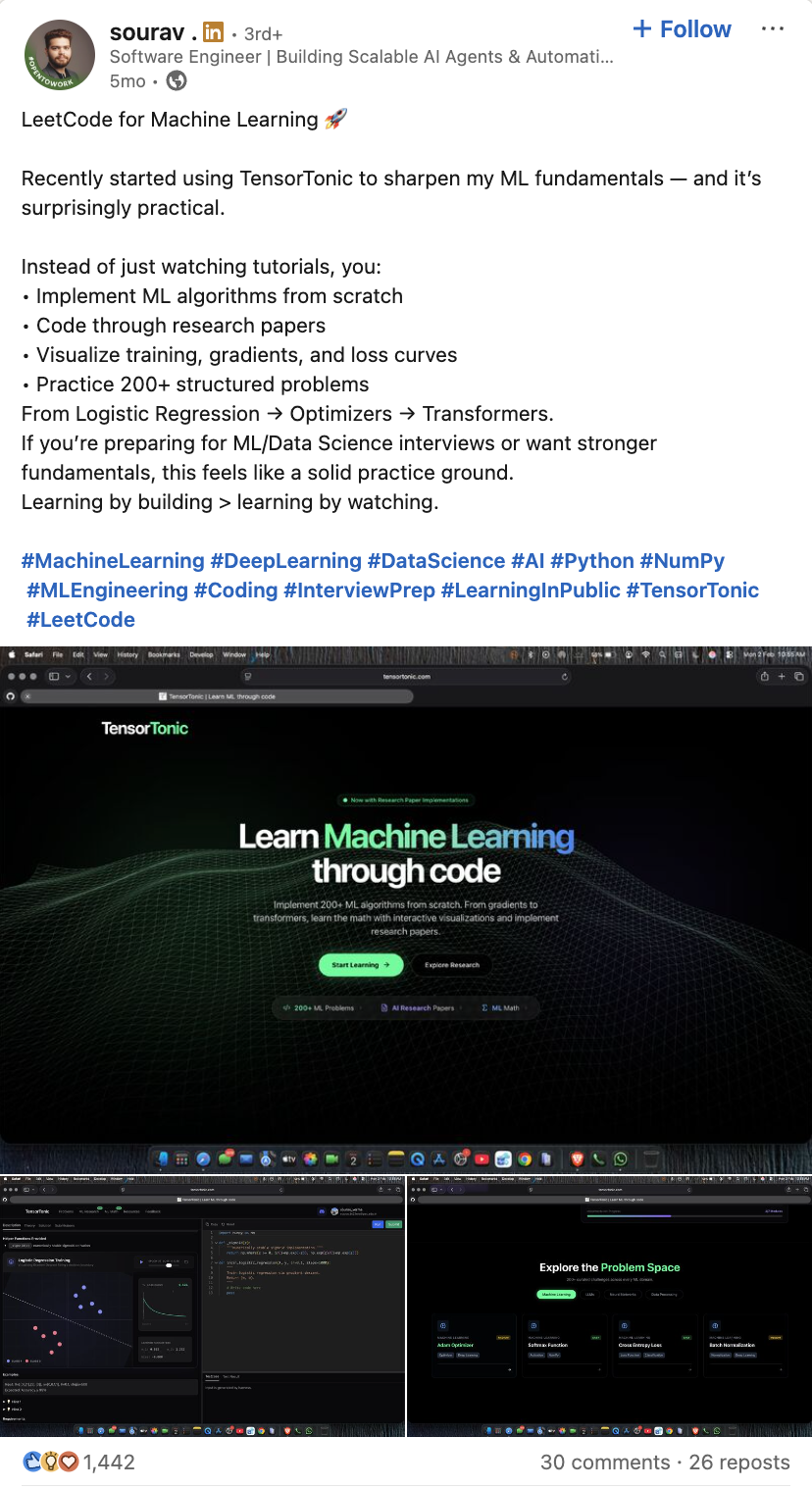
Implement 1,400+ algorithms from scratch, from foundational ML to CUDA kernels, with the math, visualizations, and research papers behind them.
PythonNumPyPyTorchCUDATriton
gradient_descent.py
Loss surface
step 0|loss 24.250
- is correct
- every step
- converges
Trusted by users from
The complete ML engineering platform
linear_regression.py
loss L(w)|rolling down the gradient
import numpy as np

def linear_regression(X, y, lr=0.01):
    w, b = 0.0, 0.0
    for _ in range(100):
        err = w * X + b - y
        w -= lr * (err * X).mean()
        b -= lr * err.mean()
return w, bSystems and GPU programming
AI Research Papers
Agentic Systems
Mathematics for ML
ML system design
Try the problems
Direction reveals how similar two vectors are. Drag one vector and watch the code compute their alignment.
Drag vector b around the circle.
import numpy as npdef cosine_similarity(a, b): dot = np.dot(a, b) norms = np.linalg.norm(a) * np.linalg.norm(b) return dot / normsOutput>>> cosine_similarity([1, 0], [0.71, 0.71])0.7071
Rows become columns while each value stays the same. Edit the matrix and watch the code return its transpose.
Edit a value in A and follow it in the transpose.
def matrix_transpose(A): rows, cols = len(A), len(A[0]) return [[A[i][j] for i in range(rows)] for j in range(cols)]Output>>> matrix_transpose([[1, 2, 3], [4, 5, 6]])[[1, 4], [2, 5], [3, 6]]
Adam combines momentum with adaptive step sizes. Watch each update move the weight toward the minimum.
import numpy as npdef adam_step(w, g, m, v, t, lr=0.2, b1=0.9, b2=0.999, eps=1e-8): m = b1 * m + (1 - b1) * g v = b2 * v + (1 - b2) * g ** 2 m_hat = m / (1 - b1 ** t) v_hat = v / (1 - b2 ** t) w = w - lr * m_hat / (np.sqrt(v_hat) + eps) return w, m, vOutput>>> adam_step(...) # step 0w = 3.500 loss = 6.125
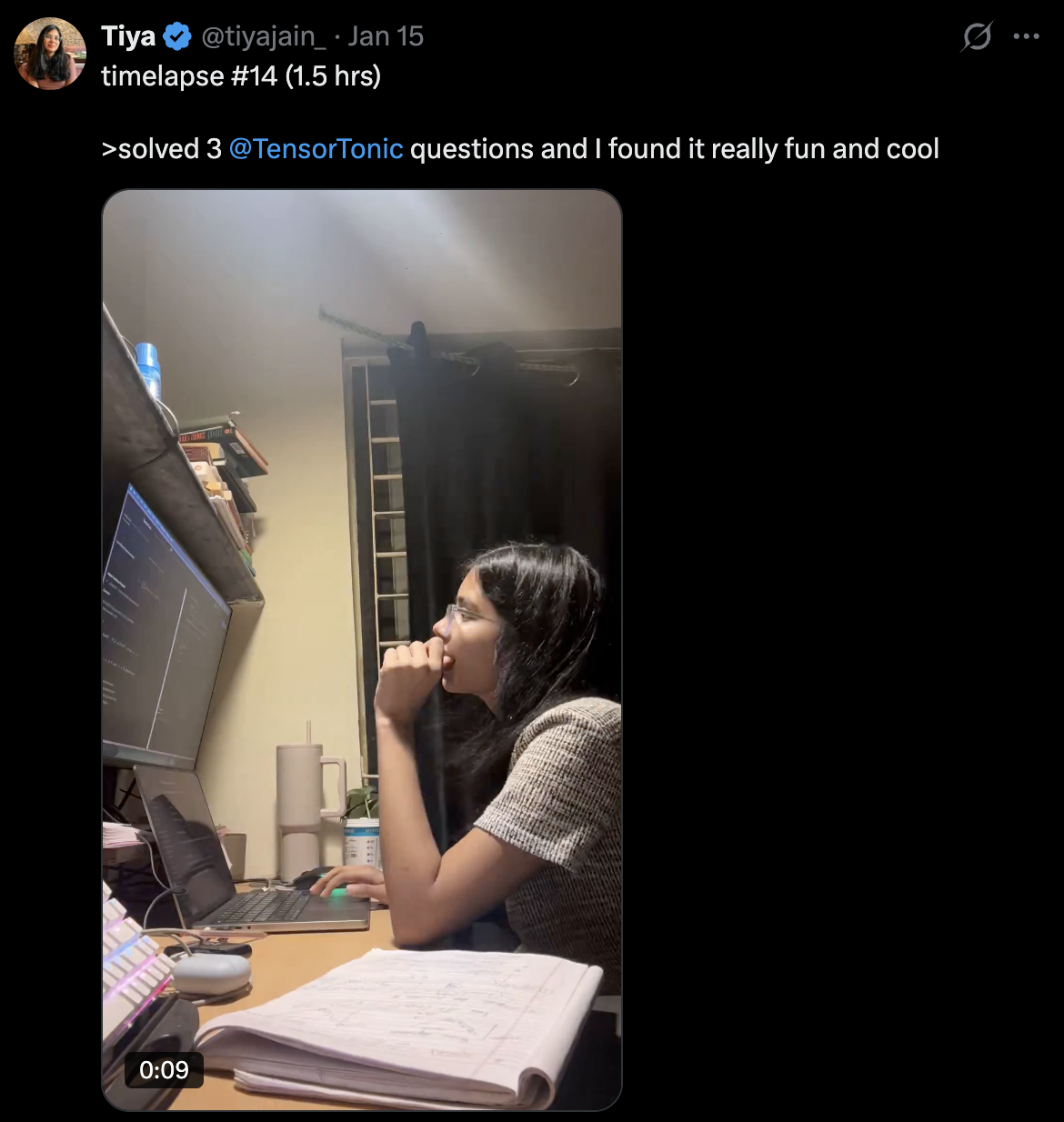
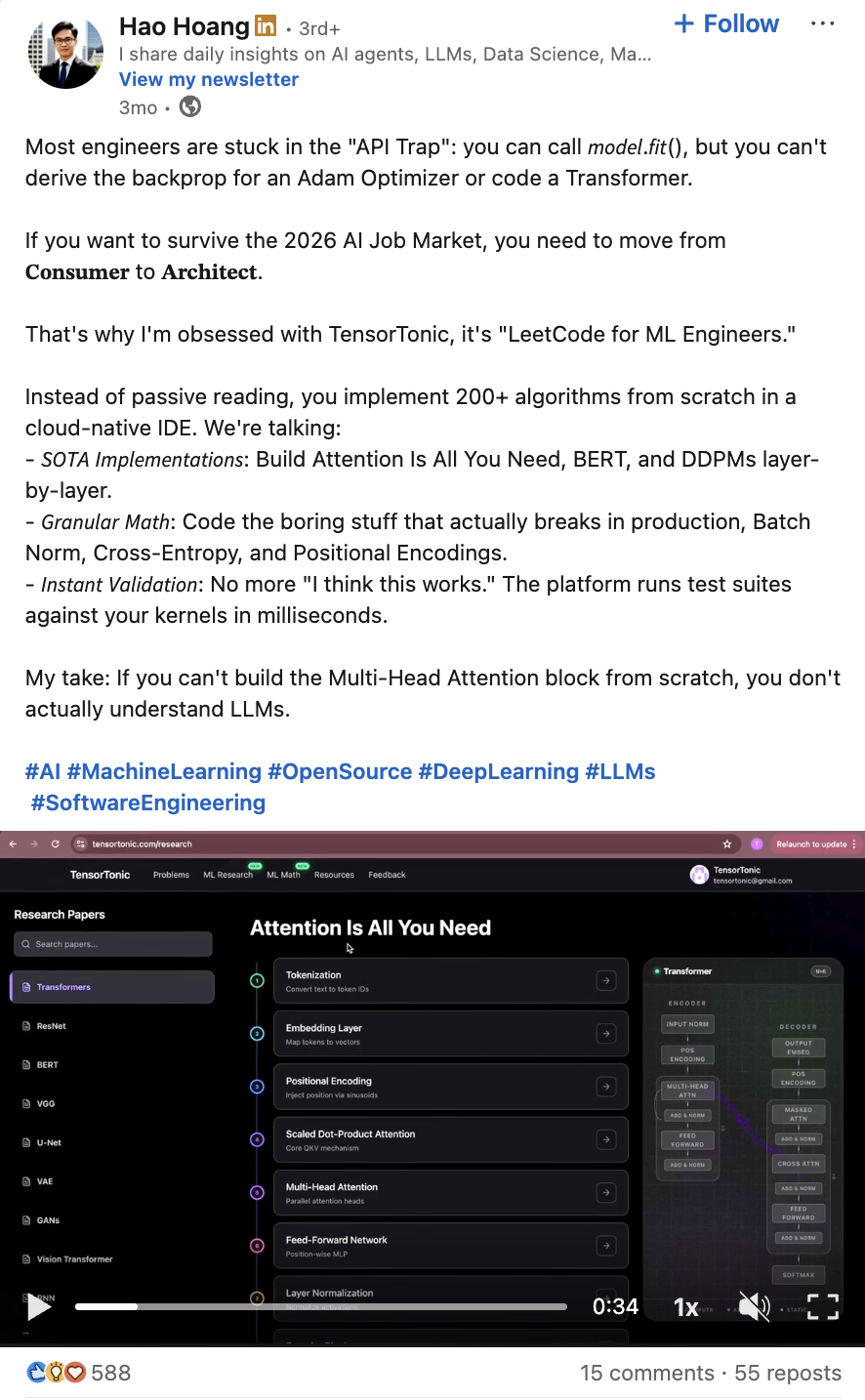
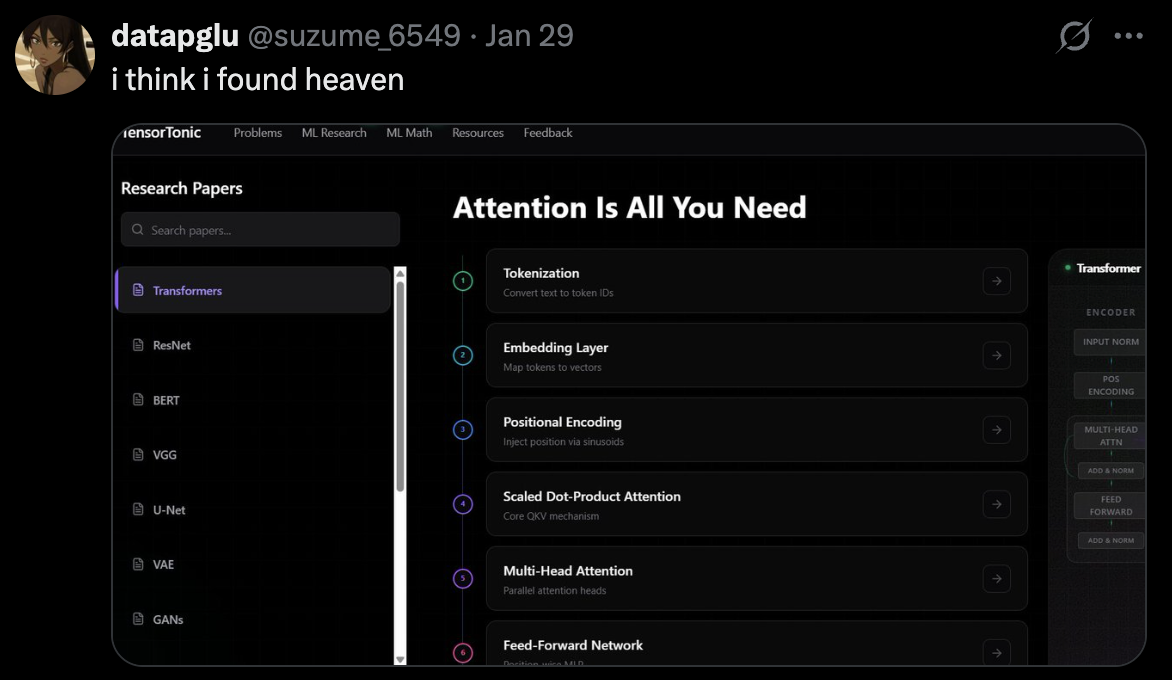
What learners are saying
50,000+
learners worldwide
1Million+
code submissions
1,400+
problems to solve

Plans
Free
$0forever
Start building your ML foundations
- Unlimited code submissions
- 500+ problems
- 35 CUDA / GPU kernel problems
- Interactive visualizations
- Theory content per problem
- 16 research paper implementations
- ML Math blogs
- Community Discord access
- 4 mock assessments
- Structured study plans
- ML System Design problems
Pro
$12/month
or $100/yr · save 31%
- Everything in Free
- Structured roadmap study plansPandas, NumPy, PyTorch, SQL FoundationsLinear Algebra, Probability, Calculus, OptimizationML, DL, NLP, RL, CV specializations
- 500+ quiz questions across 12 modules
- All interview mock assessmentsData Scientist, ML Engineer, AI EngineerResearch Engineer, GPU and Performance
- Priority support
- ML System Design problems
- Modern LLM architectures like GPT2, DeepSeek
Plus
$20/month
or $168/yr · save 30%
- Everything in Pro
- Implement modern LLM architectures like GPT-2, DeepSeek etc in PyTorch
- ML System Design problems
- Interactive design canvas
- FAANG-styled system design scenarios
Questions, answered
Is TensorTonic free to use?
TensorTonic has more than 500 problems, CUDA and GPU kernel exercises, 16 research paper implementations, and the full ML Math library completely free. Premium plans add structured study plan roadmaps, ML system design, and interview preparation.
Stop watching.
Start building.
Don't just watch ML theory. Implement it yourself, one algorithm at a time, and understand it in depth.
1,400+ problemsReal cloud GPUsLive AI sandboxes